Industry-specific insurance
A retailer’s standard commercial policy might adequately cover shop premises, stock and public liability. Yet that same policy, applied to a chemical manufacturer, a wind farm operator or a clinical trials firm, could leave catastrophic gaps. When a £500,000 claim falls back on a contractor because a subcontractor’s cover proved inadequate, or when a solar farm loses revenue to grid curtailment that business-interruption insurance refuses to pay, the consequences are swift and severe.
Industry-specific insurance exists to bridge the chasm between generic commercial policies and the realities of specialised operations. Each sector carries distinct exposures—pollution liability for chemical plants, latent defects for construction, clinical-trials liability for med-tech start-ups—that demand purpose-built coverage, precise policy wording and an understanding of regulatory frameworks. This guide introduces the key principles, sector-by-sector structures and practical considerations that determine whether your insurance protects your business or merely creates an illusion of safety.
Why Standard Commercial Policies Fail Industry-Specific Risks
Generic policies are designed around broad, predictable exposures: fire, theft, third-party injury. They work well for office-based businesses and straightforward retail operations. But the moment a firm’s activities introduce unusual hazards—slow groundwater contamination, wind-turbine gearbox failures, or research-activity liability—standard wordings reveal their limitations.
Exclusions lie at the heart of the problem. A hospitality business may discover that its all-risks policy excludes food-poisoning claims, while a haulier learns that the carrier’s CMR insurance pays only £1.50 per kilogram of lost goods—far below the actual value of high-end electronics or pharmaceuticals. Construction firms routinely face premiums 40 per cent higher than retail businesses of similar turnover, reflecting the complexity of project risks, subcontractor chains and multi-year liabilities.
The financial impact of choosing the wrong structure can be existential. A med-tech start-up insured through a generalist broker may find that product-recall cover excludes losses arising from CE-marking withdrawal, or that clinical-trials liability is absent entirely because the underwriter treated the firm as a conventional medical-device distributor. The solution is not simply « more insurance » but correctly calibrated insurance—cover written by underwriters who understand sector-specific loss patterns, regulatory obligations and operational realities.
Construction and Engineering: Complex Project Structures
Construction insurance operates across two distinct phases—works in progress and completed structures—and involves overlapping obligations between main contractors, subcontractors, employers and future occupiers. Misalignment between these policies creates the gaps that generate disputes and uninsured losses.
Project Insurance Frameworks: CAR vs Project Policies
A Contractors’ All Risks (CAR) policy covers physical damage to works, plant and materials during construction. It suits single projects with defined start and completion dates. For main contractors managing multiple sites simultaneously, a project policy (annual aggregate or rolling programme) often proves more efficient, eliminating the administrative burden of arranging individual CAR policies for each scheme and reducing premium duplication.
Choosing the wrong structure can leave a £5 million project exposed. If a main contractor relies on site-by-site CAR but forgets to notify the insurer of a variation order that increases contract value, the policy may respond only to the original sum insured, leaving the top slice uninsured.
Contractual Requirements: JCT Clause 6.4 and Beyond
Standard building contracts—particularly JCT Clause 6.4—mandate specific insurance types, limits and joint-insured parties. Over-insuring wastes premium; under-insuring breaches the contract and exposes the contractor to direct liability. Satisfying these clauses requires precision: the employer must be named as co-insured, terrorism cover may be mandated, and professional-indemnity requirements for design-and-build contracts differ from traditional procurement.
Latent Defects and Subcontractor Gaps
A contractor’s twelve-year warranty sounds comprehensive until you examine what happens if the contractor becomes insolvent in year seven. Latent-defects insurance (also called structural warranty or decennial insurance) transfers long-tail risk to an insurer, protecting the building owner independently of the contractor’s solvency. Meanwhile, the £500,000 claim that fell back on the main contractor typically arises when a subcontractor’s liability limit proves insufficient or their insurer disputes coverage. Main contractors must audit subcontractor insurance schedules before work starts and consider contingent liability extensions.
Manufacturing and Chemical Industries: Pollution and Product Liability
Chemical plants, pharmaceutical manufacturers and food processors face two interlocking exposures: environmental contamination and product defects. Standard policies address neither adequately, because the loss mechanisms—slow seepage, batch contamination, supply-chain recalls—fall outside the « sudden and accidental » triggers of traditional cover.
Gradual vs Sudden Pollution Coverage
Most liability policies cover sudden spills—a ruptured tank, an overturned tanker—but exclude gradual pollution. Yet groundwater contamination from decades of minor leaks, or soil saturation from improperly stored waste, represents the majority of environmental claims. Specialist environmental-impairment liability (EIL) policies cover both sudden and gradual pollution, historical contamination and the cost of remediation to satisfy Environment Agency standards.
Reviewing pollution cover before an Environment Agency audit is often too late; insurers will exclude known issues. The optimal trigger is a change in production processes, site acquisition or expansion into new chemical feedstocks.
Product Recall Structures for Manufacturers
When a pharmaceutical manufacturer discovers microbiological contamination in a batch distributed across twelve countries, the cost is not limited to the product itself. Product-recall insurance covers retrieval, destruction, storage, customer notification, brand rehabilitation and, crucially, loss of profit during the period the product line is suspended. For a UK manufacturer, structuring this cover requires defining the geographic scope (UK only, EU, worldwide), the trigger (regulatory order vs voluntary recall) and whether it extends to malicious tampering.
Material Change Notification Requirements
A declined claim triggered by an unreported change to production chemicals illustrates a fundamental principle: insurers price risk based on the declared process. Substituting solvents, altering temperatures or introducing new raw materials can void coverage if not notified. Policies typically include a change-in-risk clause, obligating the insured to declare material alterations. Failing to do so converts the policy into expensive wastepaper.
Renewable Energy and Infrastructure: Operational and Grid Risks
Renewable-energy projects transition through distinct risk phases—construction, commissioning, operational, decommissioning—and interact with grid operators and power-purchase agreements in ways that create unique insurance challenges. Revenue protection, not just asset damage, becomes the critical concern.
Revenue Protection Against Grid Curtailment
A solar farm or wind turbine generates revenue by exporting electricity. When the grid operator curtails output—instructing the asset to reduce generation because of network constraints—revenue vanishes. Standard business-interruption insurance does not respond because there is no physical damage. Specialist contingent business-interruption or loss-of-revenue endorsements can be written to cover curtailment, but they require precise definition: is curtailment triggered by grid instruction, frequency events or PPA penalties?
Transitioning from Construction to Operational Cover
During construction, a CAR policy protects the wind farm. At practical completion or first energisation, risk shifts to operational cover (typically property damage plus business interruption plus liability). The transition must be seamless; a gap of even a few hours can leave a £50 million asset uninsured. The policy must specify the trigger event—is it grid connection, commissioning certificate or revenue generation?—and both policies should overlap by at least 24 hours.
Decommissioning Bonds and Permit Compliance
Regulators increasingly require decommissioning bonds or financial guarantees before granting permits for mining, energy or infrastructure projects. A £2 million bond gap can block permit renewal, halting operations. Insurers can provide these bonds, but underwriting depends on detailed decommissioning plans, site surveys and evidence of funds. The bond must remain in force throughout the asset’s life and extend beyond cessation of operations until the site is remediated.
Logistics and Supply Chain: Goods in Transit
Moving £500,000 of stock across multiple hauliers, international borders and transshipment points creates a jigsaw of overlapping and potentially conflicting coverages. Understanding who insures what, when and to what limit is essential to avoid uninsured losses.
CMR Limitations and Coverage Gaps
Road hauliers operating under the CMR Convention carry automatic liability, but it is capped at approximately £1.50 per kilogram (8.33 Special Drawing Rights per kilo). For low-density, high-value goods—electronics, pharmaceuticals, fashion—this is woefully inadequate. The gap can be closed by the sender arranging cargo insurance or by purchasing CMR top-up cover from the haulier, but the onus is on the shipper to verify limits before dispatch.
Stock Throughput vs Marine Cargo: Which Structure Fits?
A high-volume distributor moving goods from a UK factory to European distribution centres faces a choice. Marine cargo insurance covers each individual shipment on an « institute cargo clauses » basis, typically all-risks but requiring declaration of each consignment. Stock throughput combines static stock cover with transit cover under a single aggregate limit, ideal for businesses with constant product flow. The latter reduces administration and often proves more cost-effective, but requires accurate declaration of peak stock values.
Seasonal Adjustments and Coverage Triggers
Transit limits must align with actual exposure. A toy distributor whose stock value trebles in the fourth quarter should increase limits before peak season, not after the first shipment is lost. Insurers typically allow mid-term adjustments on a pro-rata premium basis. Conversely, an all-risks transit policy may exclude losses caused by port strikes or customs delays unless a specific delay-in-transit extension is purchased.
Healthcare and Med-Tech: Regulatory and Clinical Liability
Healthcare providers, medical-device manufacturers and clinical-research organisations operate within tightly regulated environments where insurance adequacy is not just a commercial decision but a compliance obligation. Gaps can trigger regulatory sanctions, licence suspensions or exclusion from procurement frameworks.
Clinical Trials vs Operational Malpractice Coverage
A hospital’s medical-malpractice policy typically excludes research activities, leaving clinical trials uninsured unless a separate clinical-trials liability policy is arranged. For a med-tech start-up conducting a £5 million trial, this policy must cover participant injury, protocol deviations and investigator negligence, with limits often dictated by ethics-committee requirements or sponsor agreements. The coverage must be in place before the first participant is enrolled.
Regulatory Compliance: CQC, CE Marking and Inspections
The Care Quality Commission (CQC) may request evidence of adequate insurance during inspections. « Adequate » is not defined by statute but by the nature and scale of services provided. A domiciliary-care provider needs employers’ liability, public liability and professional indemnity; a private hospital adds clinical negligence and product liability. Loss of CE marking (or UKCA marking) can render a medical device unsaleable, but product-liability policies often exclude losses arising from regulatory non-compliance unless a specific regulatory-defence extension is purchased.
Data Protection and Cyber Exclusions in Healthcare
A £100,000 fine from the Information Commissioner’s Office (ICO) for a data breach may not be covered by a healthcare cyber policy if the breach resulted from wilful non-compliance with data-protection standards. Cyber policies typically exclude fines and penalties unless an explicit regulatory-fine extension is included. Healthcare providers must ensure their cyber cover responds to GDPR enforcement actions, ransomware, business interruption from IT failure and third-party liability for patient-data loss.
When and How to Review Industry-Specific Coverage
Insurance is not a static contract; it must evolve as your business, regulatory environment and risk profile change. Waiting for renewal is often too late. Specific trigger events should prompt immediate review: variation orders that increase project value, PPA renewals that alter revenue assumptions, launching a new clinical procedure or acquiring a site with historical contamination.
Working with a specialist broker is not a luxury but a necessity for complex industries. Generalist brokers lack access to niche underwriters, misunderstand sector-specific wordings and may place cover with insurers who dispute claims on technical grounds. A specialist broker will benchmark limits against industry norms, identify gaps between contractual obligations and coverage, and negotiate bespoke extensions for unusual exposures.
Common pitfalls include over-reliance on subcontractors’ or suppliers’ insurance without verifying adequacy, failing to notify material changes, underinsuring to save premium and assuming that « all risks » truly means all risks. Each of these errors has generated declined claims running into six or seven figures.
Industry-specific insurance is not about buying the most expensive policy or the highest limits. It is about alignment—ensuring that coverage, contractual obligations, regulatory requirements and operational realities form a coherent whole. Whether you are insuring a chemical plant against gradual pollution, a construction project against latent defects or a med-tech trial against participant injury, the principles remain consistent: understand your exposures, work with specialists who understand your sector, and review coverage whenever your risk profile shifts. The cost of getting it right is a fraction of the cost of getting it wrong.

How to Structure £5M Clinical Trials Liability Cover for a UK Med-Tech Start-Up?
Structuring a £5M clinical trial liability policy requires navigating the critical gaps between standard insurance, regulatory demands, and hidden liabilities that can bankrupt a med-tech start-up. Standard hospital medical malpractice policies explicitly exclude research, creating a primary coverage gap you…
Lire la suite
How to Insure £500,000 of Stock in Transit: A UK Operator’s Guide to Bulletproof Coverage
Relying on your haulier’s insurance to cover a £500,000 shipment is a catastrophic financial gamble, not a strategy. Standard carrier liability (CMR) is deliberately limited and may only pay a tiny fraction of your loss, often just £10-12 per kilo….
Lire la suite
How to Insure a UK Solar Farm Against Revenue Loss from Grid Curtailment?
You’ve navigated the complexities of planning, financing, and construction. Your UK solar farm is operational, a testament to modern engineering ready to generate clean energy and revenue. Then, an instruction arrives from the National Grid ESO: curtail your output. The…
Lire la suite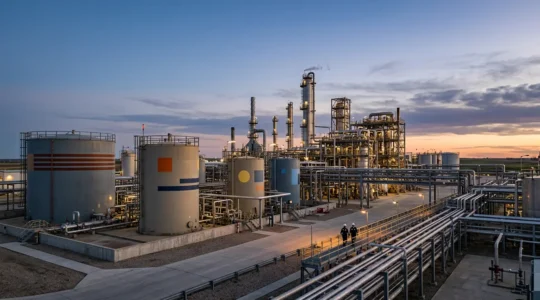
How to Insure a Chemical Manufacturing Plant Against Pollution and Product Recall
Standard liability policies leave UK chemical and pharmaceutical manufacturers dangerously exposed to the sector’s biggest risks: gradual pollution, undeclared operational changes, and complex recalls. Most general policies only cover « sudden and accidental » pollution, creating a critical gap for slow leaks…
Lire la suite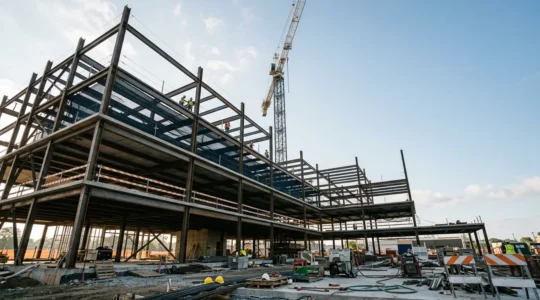
How to Insure a £5M Construction Project: A Contractor’s Guide to Eliminating Coverage Gaps
Securing insurance for a £5M construction project is not about collecting certificates; it’s about actively closing the contractual and temporal gaps where coverage is designed to fail. A subcontractor’s policy can be cancelled for non-payment without your knowledge, leaving you…
Lire la suite
Why Does Your Business Need Specialist Insurance Beyond a Standard Commercial Policy?
Standard commercial insurance is a safety net with holes tailored for someone else’s fall; it’s designed for generic events, not the unique processes that define your niche industry. General policies cover sudden, physical events, fundamentally ignoring your sector’s slow-burn or…
Lire la suite