
Standard commercial insurance is a safety net with holes tailored for someone else’s fall; it’s designed for generic events, not the unique processes that define your niche industry.
- General policies cover sudden, physical events, fundamentally ignoring your sector’s slow-burn or non-physical liabilities like regulatory breaches, gradual pollution, or long-tail software defects.
- Risk cost is tied to your industry’s inherent operations; a construction firm’s liability premium is dramatically higher than a retailer’s because its day-to-day work carries greater, more complex long-tail risk.
Recommendation: Stop ticking boxes on a generic form. The crucial step is to audit your cover against your specific operational realities and regulatory duties, not a one-size-fits-all checklist.
As a business owner in a specialised sector, you’ve done the responsible thing: you’ve purchased a commercial insurance policy. You have cover for your property, for public liability, and perhaps even business interruption. Yet, a nagging sense of unease might remain. Does that policy, sourced from a generalist provider, truly understand the intricate, nuanced risks that are part of your industry’s DNA? The common advice is to simply add more cover—a cyber policy here, a management liability extension there. But this approach often just patches over a fundamentally flawed foundation.
The core issue isn’t about missing a specific add-on; it’s a profound mismatch in risk philosophy. Standard commercial policies are built to respond to event-based risks: a sudden fire, a theft, a clear-cut slip and fall. They are excellent for these common perils. However, niche industries like fintech, advanced manufacturing, or construction operate on process-based risks, where liability arises not from a single event, but from the very nature of your operations, often over a long period. This is the critical distinction that generalist policies fail to address, creating silent, potentially catastrophic coverage gaps.
This article moves beyond the platitudes of ‘tailored cover’. As a sector-specialist underwriter, we will dissect the fine print and the core logic that separates generic from specialist insurance. We will explore why a standard policy is often insufficient by examining the specific, inherent risks in several key UK industries, demonstrating how a specialist approach isn’t an upsell, but a fundamental realignment of your insurance to match the reality of your business.
To understand these critical distinctions, this guide will break down specific industry scenarios, revealing the hidden gaps in standard policies and outlining the principles of specialist coverage. Explore the sections below to see how these concepts apply directly to your sector.
Table of Contents: Uncovering Sector-Specific Risk
- The 5 Exclusions in Standard Policies That Leave Hospitality Businesses Exposed
- How FCA-Regulated Firms Must Align Professional Indemnity with Conduct Rules?
- Why Do Construction Firms Pay 40% More for Liability Cover Than Retail Businesses?
- The Costly Error of Insuring a Med-Tech Start-Up Through a Generalist Broker
- When Should Renewable Energy Firms Reassess Grid Liability Coverage?
- Why Does Your Policy Only Cover Sudden Spills and Not Slow Groundwater Contamination?
- Why Does Your Hospital’s Medical Malpractice Policy Exclude Research Activities?
- How to Insure a £5M Construction Project Without Coverage Gaps?
The 5 Exclusions in Standard Policies That Leave Hospitality Businesses Exposed
For a hotel, pub, or restaurant owner, a standard business policy seems comprehensive, covering property damage and public liability. However, the reality of hospitality operations introduces specific risks that this generic framework often excludes by design. One of the most misunderstood areas is liability for guest property. Standard policies may offer minimal cover, but they cannot override statutory limitations. In the UK, the Hotel Proprietors Act 1956 limits liability for lost or damaged guest property, often to just £50 per item or £100 total, unless negligence is proven. While US data shows that statutory liability limits vary dramatically across jurisdictions, the principle is universal: you cannot rely on a general policy to fill a gap created by law.
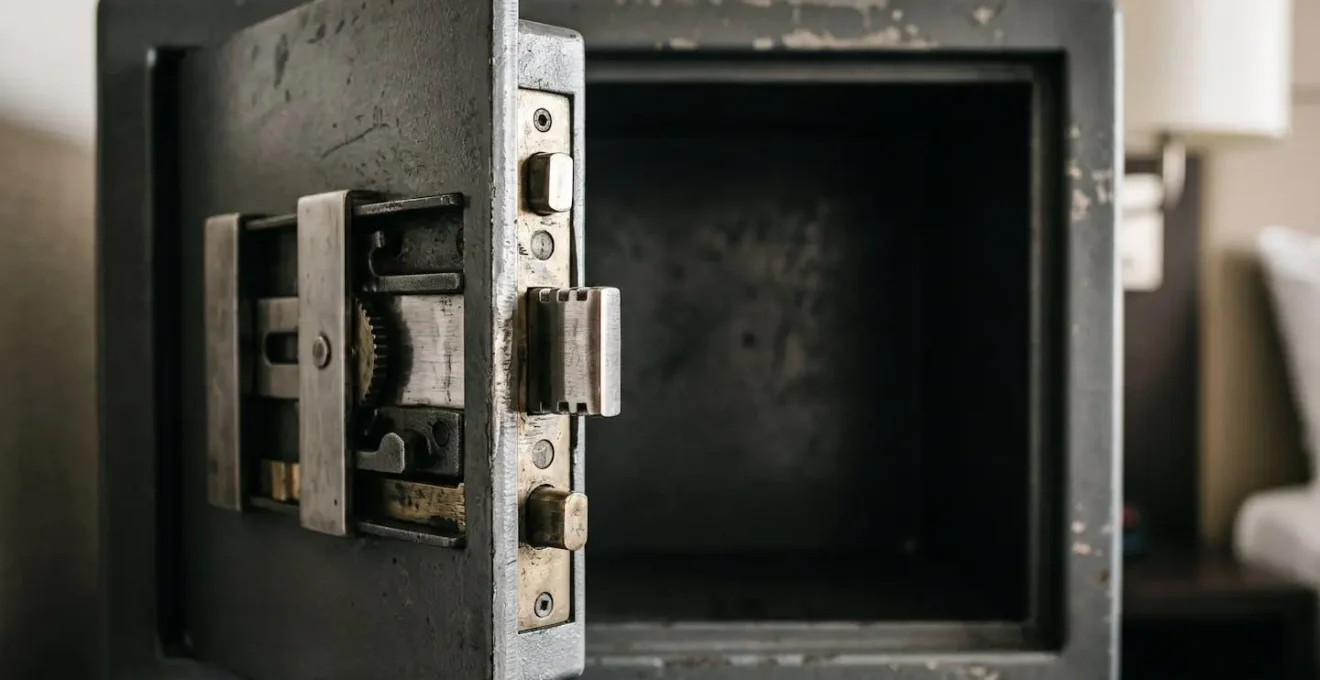
This visual metaphor of an open, empty safe represents the illusion of security provided by a standard policy when faced with such specific exclusions.
Beyond guest property, other critical gaps emerge. A standard policy’s Business Interruption (BI) cover is almost always triggered by physical damage to your premises. It would not, for example, cover a loss of income due to a street closure, a food-poisoning scare that didn’t originate from your kitchen but deters customers, or a pandemic. Furthermore, liquor liability is a significant exposure; if a patron causes harm after being served at your establishment, a standard public liability policy may contain an exclusion for incidents arising from the sale of alcohol. Specialist hospitality policies address these by offering specific extensions or standalone covers for liquor liability, non-damage denial of access, and more robust BI triggers.
How FCA-Regulated Firms Must Align Professional Indemnity with Conduct Rules?
For any UK business regulated by the Financial Conduct Authority (FCA), insurance is not just a commercial decision; it is a regulatory obligation. A general commercial policy is wholly inadequate because the primary risk is not physical but financial and advisory. The key cover required is Professional Indemnity (PI) insurance, which protects against claims of financial loss arising from negligent advice or services. This is fundamentally different from Public Liability (PL), which covers injury or property damage. For an FCA-regulated firm, a client’s financial loss due to poor advice is a far greater and more frequent risk than a client tripping in the office.
The FCA doesn’t just recommend PI cover; it mandates it with specific minimum requirements to ensure consumer protection. For instance, the FCA mandates minimum coverage levels of €1,250,000 (approx. £1.1 million) per claim and an aggregate of €1,850,000 (approx. £1.6 million) for many insurance intermediaries. A specialist underwriter understands that the policy wording must align precisely with the firm’s regulated activities. A generalist broker might provide a generic « financial advisor » policy, but it could exclude specific activities like advising on unregulated collective investment schemes (UCIS) or certain types of derivatives, creating a devastating gap.
Crucially, a specialist PI policy for a regulated firm is designed with a different coverage trigger philosophy. The trigger isn’t a physical event; it’s a « breach of professional duty, » which aligns directly with the FCA’s principles of treating customers fairly. The policy must also be on a « claims made » basis, meaning it covers claims made during the policy period, regardless of when the work was done. This necessitates continuous cover and careful management of retroactive dates to avoid gaps when switching insurers—a nuance a generalist may overlook.
Why Do Construction Firms Pay 40% More for Liability Cover Than Retail Businesses?
The significant premium difference between a construction firm and a retail business for liability insurance is a clear indicator of a core underwriting principle: risk is priced based on the inherent vice of the industry. While a retailer’s primary liability risk is a slip-and-fall on their premises (a contained, immediate event), a construction firm’s operations are fraught with complex, far-reaching, and delayed-impact risks. The higher premium directly reflects the increased frequency and severity of potential claims, from third-party worker injuries to catastrophic property damage.
Data starkly illustrates this risk differential. While these figures are from the US market, they demonstrate a universal insurance principle where industry classification drives dramatic cost differences, with construction firms facing premiums that can be over seven times higher than office-based businesses. This isn’t arbitrary; it’s a calculated reflection of the high-stakes environment of a building site. The risk of a falling object, a trench collapse, or a subcontractor’s error creating a chain of liability is profoundly greater than that of a shop floor.
This principle is further clarified by drilling down into specific trades within construction, which highlights the concept of long-tail liability—where the consequences of work performed today may not be discovered for many years.
Case Study: The Roofer’s Long-Tail Liability Premium
An analysis of trade-specific premiums shows that roofers face significantly elevated general liability costs, averaging nearly 370% more than electricians or drywall installers. This premium disparity is not due to a higher rate of on-the-job accidents alone. It is driven by the severe long-tail liability inherent in roofing. A defectively installed roof might not fail for five or ten years, but when it does, the resulting claim for water intrusion, structural damage, and mould remediation can be catastrophic. The insurer must price for the risk of a claim emerging long after the policy year has ended, a classic example of long-tail exposure that is minimal in the retail sector.
Therefore, the higher cost is a direct function of a risk profile that includes immediate third-party dangers, complex contractual liabilities, and the potential for latent defects to cause massive damage years down the line. A generalist policy simply isn’t structured to price or cover this multi-faceted risk landscape accurately.
The Costly Error of Insuring a Med-Tech Start-Up Through a Generalist Broker
Insuring a medical technology (Med-Tech) start-up is one of the most complex challenges in the commercial insurance market, and it’s a minefield for generalist brokers. A generalist may see a « tech company » and offer a standard tech PI and liability package. This is a critical error of risk-class mismatch. A Med-Tech device is not just a piece of hardware or software; it is a convergence of three distinct and high-stakes risk categories in a single product: product liability, medical malpractice, and cyber risk.
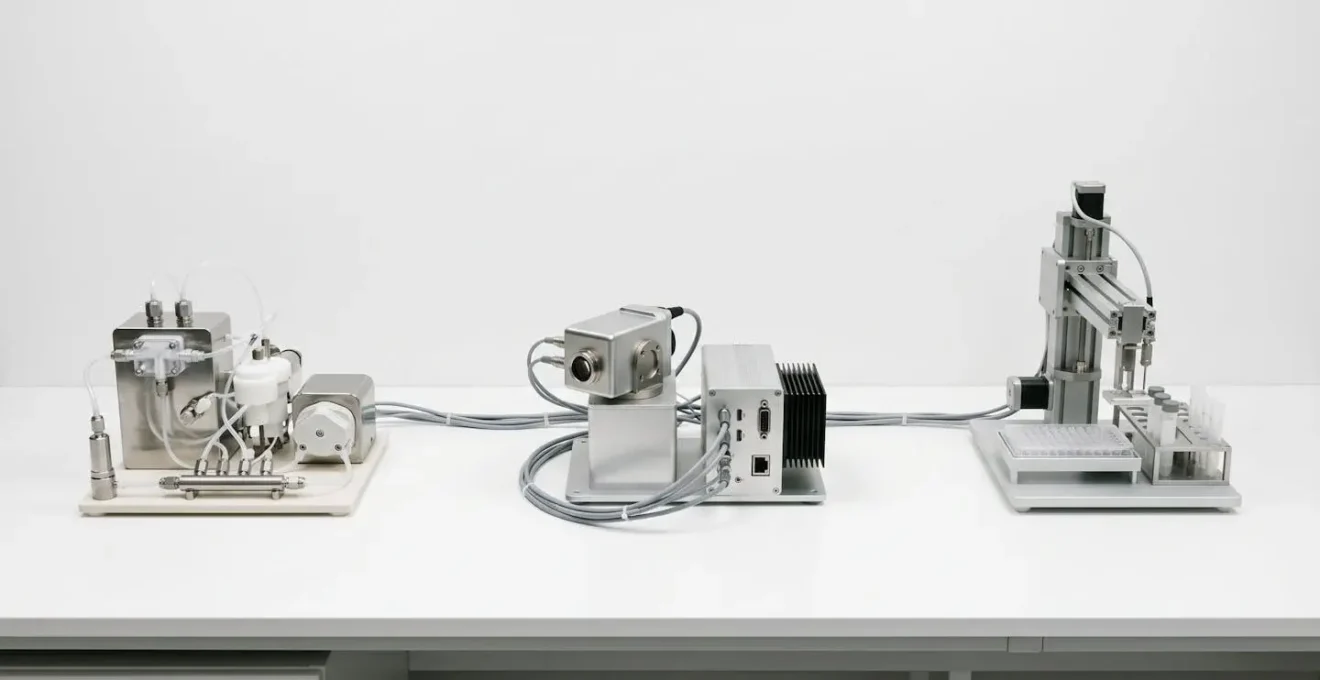
The image below conceptually illustrates this dangerous convergence: distinct zones of risk—product, clinical, and data—that are isolated in traditional insurance policies but dangerously intertwined in a single Med-Tech product failure.
Consider a smart infusion pump that administers medication based on algorithmic calculations. If a hardware defect causes it to malfunction, that’s a product liability claim. If a software bug leads to an incorrect dosage, causing patient harm, that’s a medical malpractice claim, as the device is performing a clinical function. If the device is connected to the hospital network and a hacker exploits a vulnerability to access patient data or manipulate the device, that’s a cyber liability claim. A standard policy package will have separate, uncoordinated policies for each of these, often with conflicting terms and exclusions, creating massive gaps where the different policies fail to meet.
A specialist underwriter approaches this by using a blended life sciences policy, specifically designed to cover all three exposures under one seamless agreement. This policy understands that a single product failure can trigger all three types of liability simultaneously. It ensures there are no gaps between the covers and that the definitions of « medical incident, » « product failure, » and « security breach » are harmonised. This integrated approach is something a generalist broker, accustomed to siloed policies, is unlikely to possess, leaving the Med-Tech start-up catastrophically exposed.
When Should Renewable Energy Firms Reassess Grid Liability Coverage?
For renewable energy firms, particularly those operating solar or wind farms, the initial focus is often on insuring the physical assets—the panels, the turbines, the substations. However, as a project matures and connects to the grid, its risk profile fundamentally changes. The greatest liability is no longer just physical damage; it is the financial consequence of failing to deliver power. This is when a critical reassessment of grid liability coverage becomes essential.
The key trigger for reassessment is the signing of a Power Purchase Agreement (PPA). These contracts contain stringent terms and financial penalties for failing to meet supply obligations. A standard property policy with business interruption cover is insufficient here. Why? Because it is typically triggered by physical damage. If your wind farm goes offline due to a grid operator’s fault, a software malfunction, or even a period of no wind that was not forecast (if the PPA is particularly harsh), there is no physical damage to your assets, and therefore, no insurance payout. Yet, you could be facing millions in contractual penalties.
Specialist energy policies address this with specific extensions like Delay in Start-Up (DSU) for the construction phase and, crucially, operational covers for non-damage business interruption. These policies can be structured to respond to specific perils like grid failure or mechanical/electrical breakdown without physical damage being the primary trigger. Another critical risk is serial loss; if a latent design defect is found in one turbine blade, it’s likely present in all of them. A specialist policy can be tailored to cover the cost of replacing all the faulty components, not just the one that failed, a scenario a standard property policy would almost certainly exclude.
Therefore, a firm should reassess its coverage at every major contractual milestone: upon signing the PPA, before commencing construction (to ensure DSU is adequate), and before the commercial operation date. The focus must shift from merely insuring the « stuff » to insuring the revenue stream and the contractual promises that protect it.
Why Does Your Policy Only Cover Sudden Spills and Not Slow Groundwater Contamination?
This question cuts to the heart of the « event-based vs. process-based » risk distinction and is a classic pitfall for any business handling potential pollutants, from manufacturing plants to farms. A standard Commercial General Liability (CGL) policy contains a pollution exclusion, which is then typically modified to give back a sliver of cover for pollution incidents that are « sudden and accidental. » The wording is deliberate and surgically precise. « Sudden » is interpreted by insurers and courts to mean instantaneous or happening over a very short period. « Accidental » means unexpected and unintended.
This framework is designed to cover a classic event: a forklift ruptures a drum of chemicals, causing an immediate spill. It is explicitly designed *not* to cover the most common and costly types of environmental liability: slow, gradual, or historical contamination. The slow leak from a corroding underground storage tank that seeps into groundwater over a decade is neither sudden nor, after a certain point, entirely unexpected. This is a process-based risk, and the standard CGL policy is built to deny such claims.
The core logic of the policy trigger is based on physical loss or damage, which must be direct and immediate. As legal experts in insurance recovery often clarify when discussing business interruption, the principle is the same for liability.
The loss or damage must be caused by direct physical loss of or damage to property. The suspension must be caused by direct physical loss of or damage to property.
– Anderson Kill P.C., Business Interruption Insurance For Hospitality Companies
This requirement for a direct, physical, and often sudden event is what creates the gap. To cover gradual contamination, a business needs a standalone Environmental Impairment Liability (EIL) policy. This specialist cover is specifically designed to fill the void left by the CGL policy. It covers gradual pollution, historical contamination discovered for the first time, and the associated cleanup costs, legal fees, and liabilities, which can often run into the millions. Relying on a standard CGL policy for environmental risk is like relying on a car’s airbag to work as a parachute.
Why Does Your Hospital’s Medical Malpractice Policy Exclude Research Activities?
For a hospital’s risk manager, the Medical Malpractice (MedMal) policy is a cornerstone of their insurance programme. It is designed to protect the institution and its clinical staff against claims of negligence resulting in patient injury or death during the course of medical treatment. However, many hospitals, especially teaching hospitals, are also major centres for clinical research. This is where a critical and often overlooked coverage gap appears: a standard MedMal policy is highly unlikely to cover liabilities arising from research and development activities.
This is another classic example of a risk-class mismatch. The policy is underwritten based on the risks of established, approved clinical practice. The treatment protocols are known, the standards of care are defined, and the statistical risks are relatively well understood. Clinical research, by its very nature, is experimental. It involves novel treatments, untested protocols, and volunteers who are not traditional patients. The risks are fundamentally different and far less predictable. They include potential harm from an experimental drug’s unknown side effects, failures in the informed consent process, or breaches in research protocol.
Because the risk profile is so distinct, insurers ring-fence this exposure. The standard MedMal policy will often contain a specific exclusion for any claim arising from activities conducted as part of a formal research study or clinical trial. To cover this, the hospital needs a separate Clinical Trials Insurance policy. This specialist product is designed to cover the unique liabilities of research, including injury to trial participants. It is a mandatory requirement for conducting ethical and legal research in the UK and most other jurisdictions. A specialist broker understands this distinction is non-negotiable and will ensure both policies are in place, working together without gaps. A generalist might assume « it’s all medical activity » and leave the hospital’s entire research and innovation arm dangerously uninsured.
Key Takeaways
- Standard insurance covers sudden, physical events; it is not designed for the slow-burn, non-physical, or process-based risks inherent in your niche sector.
- Your industry’s most significant liabilities—whether regulatory duties, long-tail defects, or contractual penalties—are the very things most likely to be excluded from a generic policy.
- A specialist insurance audit is not an upsell. It is a fundamental risk alignment process to ensure you are paying for cover that actually responds to the way your business operates.
How to Insure a £5M Construction Project Without Coverage Gaps?
Insuring a multi-million-pound construction project is not a matter of buying a single, large policy. It requires orchestrating a portfolio of interconnected specialist covers to create a seamless safety net. Relying on a general contractor’s standard liability policy alone is a recipe for disaster, as it leaves enormous gaps in who and what is covered. The foundation of a robust project insurance programme is typically a Contractors’ All Risks (CAR) policy, often taken out on a project-specific basis.
A CAR policy is a package that combines cover for the contract works themselves (the building, materials) against physical damage, alongside public liability for third-party injury or damage. This is far more comprehensive than a standard builder’s risk policy. While US data provides a baseline, showing that general contractors invest an average of $134 per month for builder’s risk insurance, the cost for a £5M project’s CAR policy will be significantly higher and calculated based on project-specific factors like location, duration, and construction type. However, even a CAR policy has limitations. It typically excludes the professional negligence of architects and engineers.
To close this gap, the project owner must ensure that all professional consultants carry their own Professional Indemnity (PI) insurance at an adequate level. An even better approach for a large project is to arrange a « Single Project PI » policy, which covers all professional parties under one umbrella, preventing infighting between insurers if a design-related defect occurs. Furthermore, a CAR policy may not adequately cover the financial losses from a project delay. A Delay in Start-Up (DSU) or Advanced Loss of Profits (ALOP) policy is a specialist extension that covers the owner’s loss of revenue or profit if the project is completed late due to an insured event, like a fire or major storm.
Your Action Plan: Auditing Your Project’s Insurance Programme
- Identify All Parties & Contracts: List every entity involved (owner, contractor, architects, engineers, key subcontractors) and review the insurance clauses in their contracts. Who is responsible for what?
- Inventory Existing Policies: Collect the insurance certificates for all parties. Do not just look at the titles; request the key exclusions pages for the CAR, PI, and Public Liability policies.
- Perform a Gap Analysis: Map the project risks against the collected policies. Is there a clear PI policy for design? Is the CAR policy limit sufficient for the full reinstatement value? Does anyone have cover for gradual pollution?
- Check for Co-ordination: How do the policies interact? In the event of a design-led fire, will the CAR and PI insurers blame each other, or are the triggers and « other insurance » clauses aligned to ensure a smooth claim?
- Create a Rectification Plan: Based on the gaps identified, work with a specialist broker to either insist on specific covers from contractors or arrange a project-wide policy (like Single Project PI) to fill the voids.
The logical next step is to move from theoretical understanding to practical application. A generic policy review is not enough; your business requires a forensic audit conducted by a specialist who understands your industry’s unique risk DNA. By engaging an expert, you can quantify your exposures and build an insurance programme that provides certainty, not just a certificate.