Relying on your haulier’s insurance to cover a £500,000 shipment is a catastrophic financial gamble, not a strategy.
- Standard carrier liability (CMR) is deliberately limited and may only pay a tiny fraction of your loss, often just £10-12 per kilo.
- « All Risks » policies are misnamed; they typically exclude common disruptions like port strikes, customs delays, and the resulting financial losses.
Recommendation: Stop asking if your goods are ‘insured’; start mapping every handover point in your supply chain and configure a Stock Throughput Policy that closes the specific liability gaps you find.
As a UK logistics manager, you’ve meticulously planned the journey of a £500,000 shipment. It will move from your factory to a UK depot via Haulier A, then to a European port with Haulier B, before its final leg to a distribution centre with Haulier C. You’ve received confirmation from each haulier that they have « Goods in Transit insurance. » You feel covered. This feeling, however, is a dangerous illusion born from industry jargon and widespread misunderstanding.
The standard answer is to buy a ‘Marine Cargo’ or ‘Goods in Transit’ policy. But this approach is fundamentally flawed. It treats insurance as a passive safety net rather than what it must be in a modern supply chain: a dynamic, operational tool. The real risk isn’t a total loss event like a fire; it’s the series of small, uninsured gaps at every handover point—the depot, the port terminal, the customs shed—that can bleed your business dry. These are the liability time-bombs waiting to detonate.
This guide dismantles the myth of universal coverage. We will not simply list policy types. Instead, we will adopt the mindset of a risk engineer, moving beyond the platitudes of « get covered » to a forensic examination of your operational reality. The crucial question isn’t « Am I insured? » but « Is my insurance configured to survive contact with my actual supply chain? » The answer lies in understanding the severe limitations of carrier liability, identifying the true cost of an incident, and selecting a policy framework that provides seamless protection from your factory floor to the final customer’s door.
This article provides a detailed breakdown for configuring robust insurance coverage. Explore the key sections below to understand the critical risks and strategic solutions for your high-value goods.
Summary: A UK Operator’s Guide to Bulletproof Transit Coverage
- Why Does Your Haulier’s CMR Insurance Only Pay £1.50 Per Kilo of Lost Goods?
- How to Ensure Seamless Cover from UK Factory to European Distribution Centre?
- Stock Throughput vs Marine Cargo: Which Suits a High-Volume UK Distributor?
- The Uncovered Loss: Why Your All-Risks Policy Didn’t Pay for Port Strike Delays
- When Should You Increase Transit Limits: Before Peak Season or After the First Shipment?
- How to Add Goods in Transit Cover to a Standard Commercial Combined Policy?
- Why Does Your £50,000 Excess Feel Like £150,000 When Cash Flow Is Tight?
- How to Configure a Commercial Combined Policy That Actually Matches Your Operations?
Why Does Your Haulier’s CMR Insurance Only Pay £1.50 Per Kilo of Lost Goods?
The most dangerous assumption in logistics is that your haulier’s insurance is insurance for your goods. It is not. It is liability insurance for the carrier, and its primary function is to protect them, not you. For international road freight in Europe, this liability is governed by the CMR (Convention on the Contract for the International Carriage of Goods by Road). While the name sounds official, its protection is minimal. This is the definition of weaponised complacency: relying on a system designed to limit payouts.
Under the CMR Convention, carrier liability is capped at 8.33 SDR (Special Drawing Rights) per kilogram of lost or damaged goods. This equates to roughly £10-12/kg, but market volatility can see this figure drop. If your £500,000 shipment of high-value electronics weighs 1,000kg, the maximum potential payout from the haulier’s CMR policy would be a mere £12,000, leaving you with a £488,000 loss. The oft-quoted £1.50/kg or RHA limit of £1,300 per tonne for UK domestic transit is even worse. As one industry analysis bluntly states:
CMR insurance is not insurance for your goods. It is the carrier’s liability insurance, which provides compensation only if the carrier is proven at fault — and only within specific limits.
– CMR Insurance Industry Analysis, LAT Carrier – Is Your Cargo Insured? Myths and Facts About CMR Insurance
Furthermore, to receive even this limited compensation, you must prove the carrier was negligent. If the loss was due to an ‘act of God’, hijacking, or other circumstances beyond their control, you may receive nothing. While it is technically possible to break these limits under Article 29 of the Convention by proving « wilful misconduct, » this is an incredibly high legal bar. A Spanish cargo insurance company successfully recovered beyond the standard CMR limit, but it required proving deliberate fraud by a subcontractor—a long, expensive, and uncertain legal battle you cannot rely on as a recovery strategy. Relying on CMR is not insurance; it’s a lottery ticket for a pittance.
How to Ensure Seamless Cover from UK Factory to European Distribution Centre?
Seamless coverage is not achieved by buying a policy; it’s achieved by deconstructing your supply chain. The journey from a UK factory to a European DC is not one single movement but a series of distinct stages, each with a handover of custody and a potential « liability time-bomb. » Your mission is to identify and defuse these bombs before they detonate. The key is to map the chain of responsibility and ensure your insurance plugs every single gap.
Think forensically. Who is responsible for the goods when they are sitting in the UK haulier’s depot overnight? What is the liability situation when they are being unloaded at the port terminal, before being checked in? Who covers a loss during a random customs inspection? A standard policy might cover the ‘transit’ but exclude these ‘static’ moments, which is precisely where damage, theft, and misplacement occur. This is where the concept of a Master Transportation Agreement becomes critical, creating a unified legal framework that precedes any insurance claim.

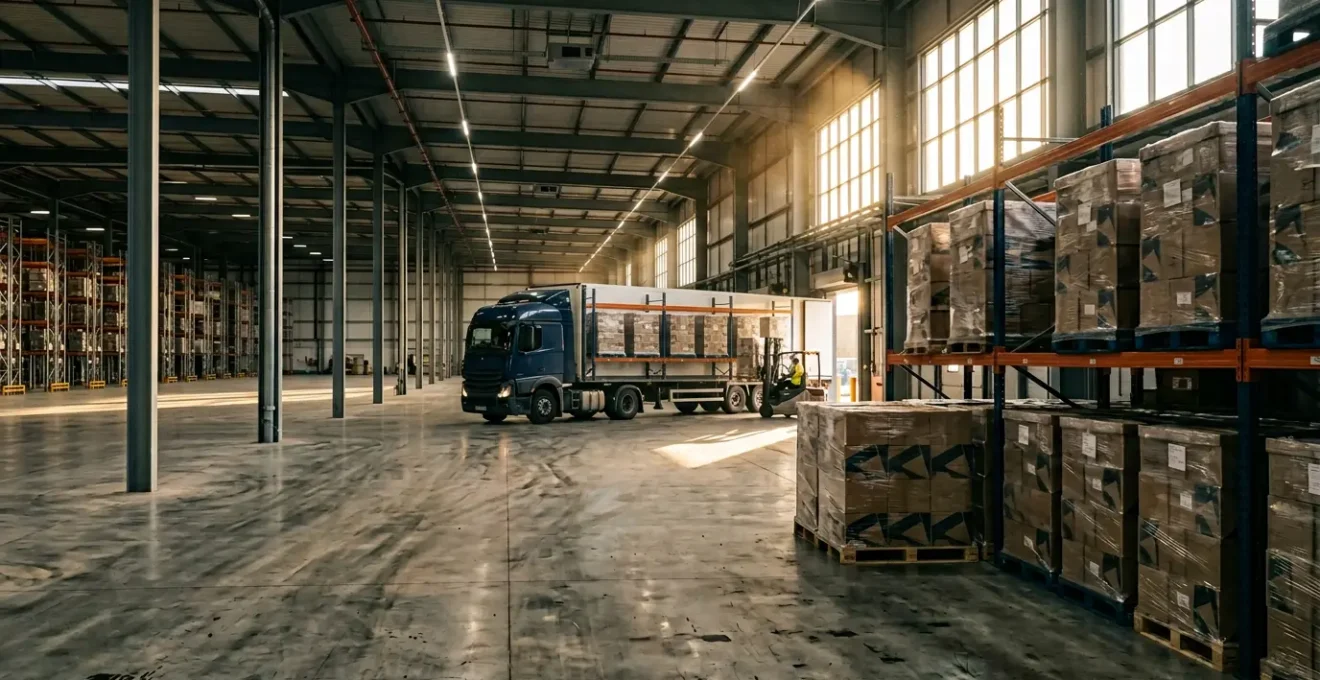
As this image illustrates, the moment of handover is the point of maximum vulnerability. True coverage requires a policy that understands these transitions and doesn’t arbitrarily distinguish between moving and static goods. You need a single policy that sees the entire journey as one continuous risk, from the moment it leaves your production line to the moment it is signed for at its final destination. Anything less is just a collection of disconnected promises.
Your Action Plan: Mapping the Chain of Liability
- Map Handover Points: List every single point where custody changes: UK haulier depot, port terminal, customs warehouse, EU carrier truck. Identify the responsible party at each stage.
- Interrogate Each Point: For each handover, ask the specific insurance question: « Who is liable if goods are damaged during customs X-ray? » or « What coverage applies during 48 hours of storage at the port terminal? » Document the answers (or lack thereof).
- Mandate Insurance Levels: Establish Service Level Agreements (SLAs) with all carriers that mandate their minimum insurance levels (beyond CMR) and clarify liability terms at each transition point.
- Implement a Master Agreement: Use a Master Transportation Agreement that all hauliers in your network must sign. This creates a single, overriding legal framework.
- Address Administrative Risks: Secure ‘Delay in Start-Up’ or consequential loss extensions to cover post-Brexit administrative risks, as delays from incorrect customs paperwork are typically excluded from standard transit policies.
Stock Throughput vs Marine Cargo: Which Suits a High-Volume UK Distributor?
For a high-volume UK distributor, the choice between a traditional Marine Cargo policy and a Stock Throughput Policy (STP) is a critical strategic decision. It’s the difference between insuring individual journeys and insuring your entire inventory, wherever it is in your supply chain. For an operation with £500,000 of stock in motion, the limitations of the former quickly become apparent.
A Marine Cargo policy is journey-based. It’s designed to cover goods from Point A to Point B. While you can get an annual policy that covers all such journeys, its protection fundamentally ‘switches off’ once the goods arrive and are stored. This creates significant gaps. If goods are damaged in your warehouse a week after arrival, the Marine Cargo policy is irrelevant. You would need a separate property or stock policy to cover that loss, leading to multiple policies, potential coverage gaps, and the risk of disputes between insurers over when the damage occurred.
A Stock Throughput Policy (STP), by contrast, is inventory-based. It provides a single, seamless ‘cradle-to-grave’ coverage for your stock. It protects your goods while in transit (by sea, air, or road), while being stored in your own or third-party warehouses, and during processing or manufacturing stages, right up until the point of final sale. For a distributor, this is transformative. There are no arguments about whether the stock was ‘in transit’ or ‘in storage’—it’s all simply ‘your stock’ and it’s covered under one comprehensive policy. This eliminates gaps, simplifies administration, and often proves more cost-effective by bundling risks into a single, clearer premium.
For a business with high-value stock moving through a multi-stage distribution network, the STP is operationally superior. It aligns the insurance cover with the physical flow of goods, recognising that for a distributor, inventory is a constantly moving asset. A Marine Cargo policy treats your business as a series of disconnected trips; an STP understands it as a continuous flow.
The Uncovered Loss: Why Your All-Risks Policy Didn’t Pay for Port Strike Delays
One of the most painful lessons in logistics is discovering that your « All Risks » cargo policy is anything but. The term is a marketing misnomer. A more accurate name would be « All Risks Except for a Long List of Specific, Common, and Financially Damaging Exclusions. » A primary example of this is loss resulting from delay, a risk that has become increasingly prevalent due to port congestion, labour disputes, and heightened customs scrutiny.
Imagine your £500,000 shipment is stuck on a vessel outside a port for three weeks due to a strike. The goods are not physically damaged, but you miss your delivery deadline, incurring contractual penalties from your customer. You have to pay for expensive demurrage and detention charges. Your cash flow is hit because the goods can’t be sold. You file a claim under your ‘All Risks’ policy, only to have it rejected. Why? Because, as Jeffery Kaufmann, a leading marine insurance executive, clarifies, delay is almost universally excluded. As he states in an analysis on port strike implications:
Most cargo policies do not include coverage for delay. Delay is a paramount exclusion on most policies, and unless deterioration/spoilage of perishable goods due to delay is specifically endorsed onto the policy, cargo owners could be left without coverage.
– Jeffery Kaufmann, Executive Vice President and Head of Marine Business, MSIG USA / Lockton Global (Port Strike Insurance Implications)
Even if you have a specific « Delay in Transit » extension, it’s often of limited use. These extensions are not designed for short-term operational hiccups; they are for catastrophic interruptions. In fact, most delay in transit policies only begin coverage after a trigger period of 30-60 days has passed. A three-week strike that cripples your quarterly sales would not even register. Proactive risk management—monitoring disputes, planning alternative routes, and understanding your policy’s ‘Frustration of Voyage’ clause—is therefore far more effective than relying on an insurance policy that is designed not to pay out for such events.
When Should You Increase Transit Limits: Before Peak Season or After the First Shipment?
The question is a trick. The correct answer is: you should have already done it. Managing your transit insurance limits reactively is a recipe for an uninsured loss. Insurance should be a proactive tool aligned with your business forecasting, not a reactive measure taken after your risk exposure has already skyrocketed. With approximately 174 billion tonne kilometres of goods transported by road in the UK, the system is under constant pressure, especially during seasonal peaks.
Consider your peak season—Christmas, Black Friday, or a summer sales event. You know that for two months, your average shipment value will double, and the total value of stock in your supply chain could triple. If your standard transit limit is £250,000 per conveyance, but during peak season you regularly have two shipments worth £400,000 each moving on the same night, you have a massive uninsured exposure. Waiting until « after the first shipment » to adjust your limits means you have wilfully sent a shipment out with insufficient cover.
The correct approach is to treat your insurance limits as a key part of your seasonal operational planning. Three months before peak season begins, your logistics and finance teams should meet with your insurance broker. The conversation should be driven by data:
- Forecasted Volume: What is the projected value of goods in transit at any given time?
- Accumulation Risk: What is the maximum value of stock that could accumulate in a single location (e.g., a haulier’s depot, a port, or even a single vehicle) during this period?
- Lead Times: Have your supplier lead times changed, requiring you to hold more stock for longer?
This forward-looking approach allows you to negotiate a temporary increase in limits or a specific peak-season endorsement ahead of time. It ensures your coverage dynamically scales with your operational tempo. Waiting until the warehouse is already overflowing is simply too late.

How to Add Goods in Transit Cover to a Standard Commercial Combined Policy?
Adding a Goods in Transit (GIT) extension to a standard Commercial Combined policy is often presented as a simple, cost-effective solution. In reality, it can be one of the most dangerous financial traps a business can fall into, especially for a company moving £500,000 worth of stock. Widespread underinsurance is a major issue in the UK; startling data reveals that as many as 4 in 5 (80%) of SMEs using this type of cover could be inadequately protected. These extensions are typically designed for small businesses with low-value goods in their own vehicles, not for complex, multi-haulier supply chains.
The problem lies in the fine print and the dangerously low sub-limits. A Commercial Combined policy might have an overall liability limit of £5 million, but the GIT extension within it could be sub-limited to just £50,000. For your £500,000 shipment, this is effectively no cover at all. Furthermore, these extensions are riddled with restrictive warranties and exclusions that do not align with the reality of a third-party logistics network.
Before even considering such an extension, you must become an interrogator. Your broker will not volunteer these weaknesses; you must actively seek them out. The following questions are not just helpful; they are essential to avoiding a catastrophic coverage failure:
- Third-Party Hauliers: Does this extension explicitly cover goods in the custody and control of multiple, unnamed third-party hauliers, or only goods in our own vehicles? Most standard extensions exclude subcontractor custody.
- Unattended Vehicle Clause: What are the exact conditions for overnight theft from an unattended vehicle? Does it require the vehicle to be in a locked, CCTV-monitored compound? Is a public car park excluded?
- Sub-Limit vs. Total Value: What is the absolute maximum payable under this GIT section, regardless of the overall policy limit? Is this sub-limit sufficient for our single largest consignment?
- Consequential Loss: Does the policy explicitly exclude consequential loss? If a lost shipment causes us to incur penalties from our customer, are those costs covered? (The answer is almost always no).
- Commodity Exclusions: Are there exclusions for high-value goods like electronics, pharmaceuticals, or alcohol that would render the cover useless for our actual products?
In 99% of cases for a serious logistics operation, a GIT extension on a Commercial Combined policy is a false economy. It provides the illusion of security while offering no meaningful protection when an incident occurs.
Why Does Your £50,000 Excess Feel Like £150,000 When Cash Flow Is Tight?
The policy excess, or deductible, is often viewed as the « cost » of a claim. This is a fundamental miscalculation. The excess is merely the entry fee. The True Cost of an Incident (TCI) is a far larger and more painful figure, often 3-4 times the excess amount. When your business is already operating on tight margins, a £50,000 excess can trigger a cascade of uninsurable costs that feel like a £150,000+ blow to your cash flow.
An insurance claim is not a clean financial transaction; it’s a massive, unplanned operational project. Senior management time is immediately diverted from revenue-generating activities to investigating the loss, compiling documentation, and managing the insurer. This « soft cost » is significant. If the goods are needed urgently, you must pay for expedited replacement and premium shipping out of pocket, hoping for eventual reimbursement. Customer relationships are strained, often requiring discounts or other compensation to maintain goodwill. These are real, immediate cash outflows that are rarely covered by any policy.
The following table breaks down the typical, uninsurable costs that stack up on top of a standard policy excess after a significant loss event:
| Cost Component | Example Amount (£) | Notes |
|---|---|---|
| Policy Excess | 50,000 | The visible, contractual deductible |
| Staff Time (Investigation & Claim Prep) | 8,000-15,000 | Senior management diverted from revenue-generating activities; external loss adjusters if complex |
| Lost Management Focus | 10,000-25,000 | Opportunity cost: delayed strategic projects, missed business development |
| Replacement Goods Cost | 50,000 | Reordering at potentially higher spot prices |
| Expedited Shipping | 12,000-20,000 | Air freight vs. original sea freight; premium haulage rates |
| Customer Penalties / Late Delivery Fees | 15,000-30,000 | Contractual penalties; discount compensation to retain customer goodwill |
| Total Incident Cost | 145,000-190,000 | The £50k excess is just 26-34% of true financial impact |
Understanding this formula changes everything. It reframes the goal of insurance from simply « covering the value of the goods » to « protecting the business’s cash flow and operational stability. » It highlights the critical importance of risk management to prevent claims in the first place, and the need for policies (like Stock Throughput) that are designed for rapid, straightforward settlement to minimise business disruption.
Key Takeaways
- Carrier liability (CMR/RHA) is a financial trap, not protection; it covers a tiny fraction of your goods’ value.
- ‘Seamless cover’ is an operational achievement, requiring you to map and insure every handover point in your supply chain.
- For high-volume distributors, a Stock Throughput Policy (STP) is operationally and financially superior to a traditional Marine Cargo policy.
How to Configure a Commercial Combined Policy That Actually Matches Your Operations?
We’ve established that a simple GIT extension is inadequate. The goal, therefore, is not to find a better generic policy, but to configure a policy that is a true reflection of your unique operational fingerprint. A properly structured insurance programme, whether a standalone Stock Throughput Policy or a heavily manuscripted Commercial Combined policy, must be built from the ground up, starting with your daily reality. The UK road freight transport market, estimated by IBISWorld at approximately £36.2 billion, is too vast and complex for one-size-fits-all solutions.
This configuration process begins with total transparency with your broker. You must abandon the idea of simply providing a « total value of goods » figure. Instead, provide them with a detailed operational playbook: flowcharts of your supply chain, lists of all third-party hauliers and warehouses, copies of their contracts, peak season forecasts, and details of your most and least valuable commodities. You are not buying a product off the shelf; you are commissioning a bespoke piece of financial machinery.
The key is to focus on the ‘basis of valuation’ clause and the ‘conditions’ in the policy wording. You need the valuation to be « cost, insurance, freight + 10% » (or more) to cover your immediate replacement expenses and lost profit margin. You must strike out any condition that your operation cannot realistically comply with 100% of the time. For example, if a policy requires all overnight parking to be in a specific type of secure compound, but you know your drivers occasionally use approved lay-bys, that condition is a claim denial waiting to happen. It must be negotiated and amended before the policy is bound.
Ultimately, configuring a policy that works means treating your insurance broker as a supply chain partner, not a salesperson. They need to understand the ‘why’ behind your movements, the risks at each node, and the financial impact of disruption. A policy is just a document; a well-configured insurance programme is a cornerstone of operational resilience.
To implement this level of detailed, operationally-aware risk management, the next logical step is to engage a specialist marine and transit insurance broker for a full review of your supply chain and existing coverages.