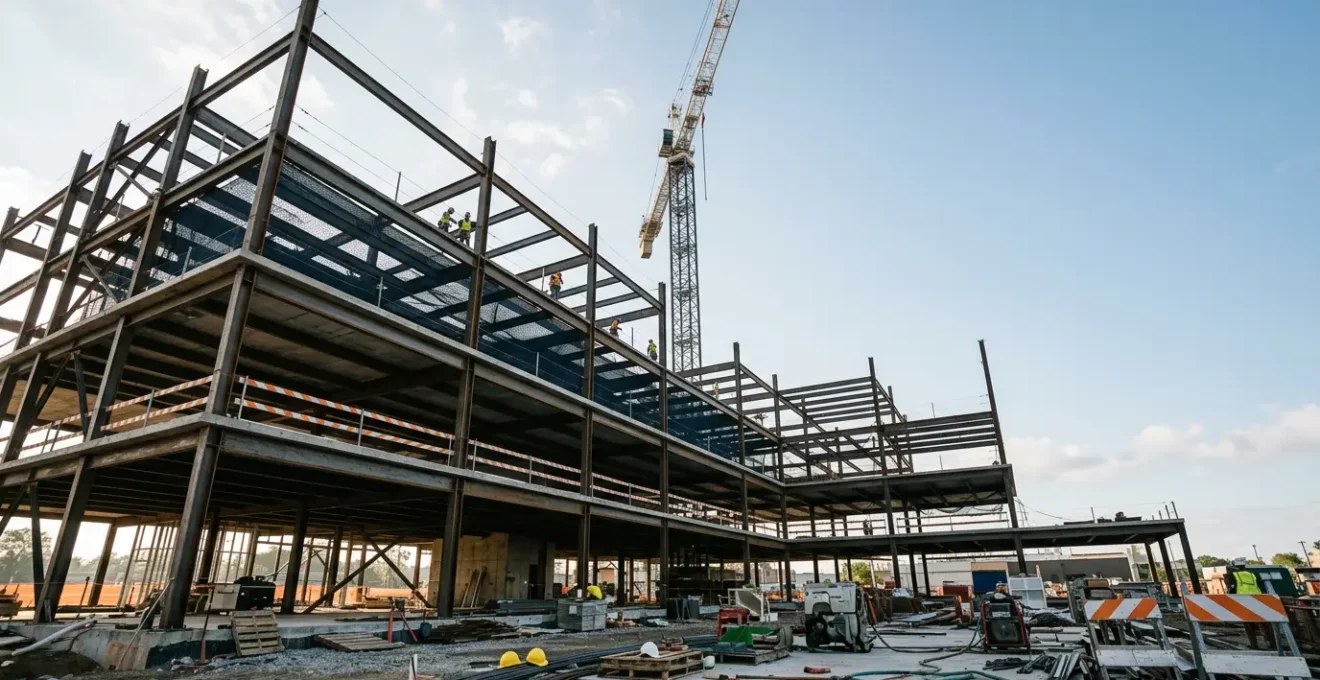
Securing insurance for a £5M construction project is not about collecting certificates; it’s about actively closing the contractual and temporal gaps where coverage is designed to fail.
- A subcontractor’s policy can be cancelled for non-payment without your knowledge, leaving you vicariously liable for multi-million-pound losses.
- A 12-year contractor warranty is a contractual promise dependent on solvency, not a substitute for a first-party Latent Defects Insurance policy that pays out directly.
Recommendation: Implement a continuous monitoring system for all subcontractor policies and write « primary and non-contributory » language into every downstream contract to protect your own insurance record.
For any main contractor overseeing a £5M construction project, the moment the insurance certificates for all parties land on your desk feels like a milestone. A Contractor’s All Risks (CAR) policy is in place, subcontractors have provided proof of public liability, and the JCT contract requirements appear satisfied. This stack of paper is meant to represent a robust shield against the inherent risks of construction. Yet, this feeling of security is often a dangerous illusion.
The standard industry practice of « box-ticking » for insurance compliance is precisely what creates catastrophic, uninsured losses. The greatest financial risks on a project of this scale don’t come from a complete absence of insurance, but from the subtle, often invisible, gaps between policies. These coverage gaps are where a subcontractor’s cancelled policy leaves you vicariously liable, where a seemingly minor variation order invalidates a works value, or where a « product » failure isn’t covered by a public liability policy.
But what if the key to truly de-risking a project wasn’t just having insurance, but engineering a seamless risk transfer mechanism? This guide moves beyond the basics of policy types. It focuses on the critical, often-overlooked weak points in a project’s insurance structure. We will explore how to make strategic decisions on policy structure, dissect JCT clauses, understand the crucial difference between a warranty and a true insurance backstop, and write contract clauses that ensure your subcontractors’ insurance actually responds when you need it to.
This article provides a framework for contractors and developers to proactively audit and manage project insurance as a dynamic system, not a static document. Follow along as we dissect the specific areas where risk hides and provide the technical strategies to ensure that for your next £5M project, the risk is truly transferred, not just temporarily covered.
Contents: How to Insure a £5M Construction Project: A Contractor’s Guide to Eliminating Coverage Gaps
- CAR vs Project Policy: Which Structure Suits a Main Contractor with Multiple Sites?
- How to Satisfy JCT Clause 6.4 Insurance Requirements Without Over-Insuring?
- Do You Need Latent Defects Insurance If the Contractor Provides a 12-Year Warranty?
- The £500,000 Claim That Fell Back on the Main Contractor Due to Subcontractor Gaps
- When Should You Update Project Insurance: At Variation Order or Practical Completion?
- How to Write Contract Clauses That Ensure Subcontractor Insurance Responds?
- Public vs Products vs Employers’ Liability: Which Policy Responds to a Visitor’s Injury?
- How to Transfer £5M of Project Risk to Your Subcontractors and Their Insurers?
CAR vs Project Policy: Which Structure Suits a Main Contractor with Multiple Sites?
The foundational decision in structuring your construction insurance is whether to use an annual Contractor’s All Risks (CAR) policy or insure on a project-by-project basis. For a main contractor managing multiple sites, this choice has significant implications for cost, administration, and, most importantly, potential coverage gaps. The context is high-stakes; a recent analysis shows that around 80% of construction firms face significant challenges due to cost overruns, making efficient and comprehensive risk management critical.
An annual CAR policy offers a blanket approach. It provides uniform coverage terms across all your projects for a 12-month period, which is ideal for contractors with a steady stream of similar-value projects. This structure simplifies administration—you negotiate terms once a year—and can be more cost-effective if your total contract value is high. It also eliminates the risk of a gap in cover between the completion of one project and the start of another.
Conversely, a project-specific policy is tailored to the unique risks of a single contract, like your £5M build. This is often preferred for unique or high-risk projects (e.g., involving deep basements, complex demolition, or unconventional materials) where an annual policy’s standard terms might not be adequate. While it ensures bespoke coverage, managing individual policies for multiple sites creates a heavy administrative burden and introduces the risk of errors or gaps if a new project isn’t declared in time.
For contractors with a varied portfolio—a mix of small refits and larger new builds—a hybrid approach is often best. A master policy with a declaration-based system combines the administrative ease of an annual policy with the flexibility to declare individual projects, adjusting premiums and terms as you go. This prevents both under-insuring complex jobs and overpaying for simple ones.
How to Satisfy JCT Clause 6.4 Insurance Requirements Without Over-Insuring?
The Joint Contracts Tribunal (JCT) suite of contracts forms the backbone of many UK construction projects, and its insurance clauses are notoriously specific. Clause 6.4, in particular, is a critical checkpoint. As insurance experts from C-Link highlight, this clause is the mechanism that empowers the client or Employer to verify that your insurance is not just in place, but adequate for the contract’s demands.
clause 6.4 within all three contracts allows for the Employer to request evidence to be issued that the relevant insurance is indeed in place
– C-Link Insurance Experts, JCT Insurance: A Breakdown
Satisfying this clause is not just about producing a certificate; it’s about demonstrating that the policy—whether it’s Option A (Contractor-led ‘All Risks’), Option B (Employer-led), or Option C (Existing Structures)—truly covers the specified risks without expensive duplication. Over-insuring is a common and costly mistake, particularly on projects involving existing structures (Option C), where a landlord’s policy is already in play.
The challenge is to layer coverage intelligently. A common scenario is a fit-out within a multi-tenant building where the landlord already insures the main structure. Simply taking out a new, full-value policy would mean paying for coverage that already exists. A more sophisticated approach involves negotiating with insurers to make the contractor’s public liability respond up to an agreed limit, with the landlord’s existing policy covering anything above that. This requires careful drafting and often a C.1 Replacement Schedule in the JCT contract, which indemnifies the Employer for any excess claims, ensuring a seamless transfer of risk without redundant premiums.
Case Study: Layering Coverage for a JCT CAT-B Fit-Out
A contractor was engaged for a CAT-B fit-out under a JCT Design and Build Contract for a tenant in a large commercial building. The standard JCT Insurance Option C would require the Employer (the tenant) to arrange a joint names policy for the existing structure. However, the building’s landlord already held this insurance. To avoid costly duplication, a solution was engineered: the Contractor’s public liability policy was endorsed to respond to a primary limit for any damage. The landlord’s building insurance would then respond to claims exceeding that limit. To close the gap, the contractor successfully requested a C.1 Replacement Schedule in the contract, indemnifying the Employer from liability on any excess claims not covered by these primary policies. This demonstrated a technical, cost-effective satisfaction of JCT requirements without over-insuring.
This technical approach prevents paying twice for the same cover and demonstrates a high level of commercial and contractual awareness to the client, satisfying Clause 6.4 in spirit and letter.
Do You Need Latent Defects Insurance If the Contractor Provides a 12-Year Warranty?
A common point of contention at project completion is the perceived overlap between a contractor’s 12-year warranty and a Latent Defects Insurance (LDI) policy. Many clients, and even some contractors, believe a robust warranty is sufficient protection against future structural issues. This is a fundamental misunderstanding of risk. A warranty is a contractual promise; an LDI policy is a regulated, first-party financial instrument. The difference is critical, especially when owners are left facing significant financial costs for rectifying defects years after completion.
A contractor warranty is only as strong as the contractor’s balance sheet and continued existence. If the contracting firm ceases trading, is sold, or becomes insolvent, the warranty becomes worthless. Furthermore, claiming under a warranty requires you to prove the contractor was at fault, often leading to protracted, costly legal disputes to establish negligence. It’s a third-party claim that puts the burden of proof entirely on the property owner.
In stark contrast, Latent Defects Insurance is a first-party policy. This means the property owner claims directly from the insurer. The trigger for a claim is the discovery of a qualifying defect, not the need to prove who was at fault. This eliminates the need for litigation against the contractor. Crucially, the policy remains valid for its 10-12 year term regardless of whether the original contractor is still in business. This makes LDI fully assignable to future owners and tenants, significantly enhancing the property’s value and saleability.
For a £5M project, relying solely on a warranty transfers risk to a single commercial entity. LDI transfers the risk to a regulated insurer, providing a far more secure and liquid form of protection. The difference in the quality of this protection is not marginal; it is absolute.
| Feature | Contractor Warranty | Latent Defects Insurance (LDI) |
|---|---|---|
| Nature of Protection | Contractual promise dependent on contractor solvency | Regulated financial instrument paying out regardless of contractor solvency |
| Assignability | Limited or no assignability to future owners | Freely assignable to future owners and tenants, enhancing property value |
| Coverage Scope | Often excludes consequential losses and investigation costs | Covers repair costs and strengthening of affected areas |
| Claim Trigger | Requires proving contractor fault – potential lengthy disputes | Responds directly to discovery of qualifying defect without proving negligence |
| Duration & Renewal | Becomes void if business is sold or ceases trading | 10-12 years coverage with single premium payment, no annual renewal |
| Claims Basis | Third-party claim requiring legal proceedings | First-party policy with direct payout to property owner |
The £500,000 Claim That Fell Back on the Main Contractor Due to Subcontractor Gaps
The theory of vicarious liability becomes painfully real when a subcontractor’s insurance fails. A main contractor is ultimately responsible for ensuring safety and compliance on site, and this responsibility extends to the actions and omissions of their subcontractors. A seemingly valid certificate of insurance at the start of a project offers no protection if that policy is not actively maintained. This is the most common and dangerous coverage gap in construction.
This risk is not hypothetical. It materialises in significant, uninsured losses that fall directly onto the main contractor’s books, often in unexpected ways. The breakdown in the insurance chain can have severe consequences, as the following real-world example demonstrates.

The image above visualises the critical timeline where a gap can emerge. A certificate is a snapshot in time, but a policy is a live contract that can be altered or cancelled, often without the main contractor’s knowledge. This is where robust compliance systems become more important than the initial paper-chase.
Case Study: The £500,000 Uninsured Cyber Loss
On a major project, a main contractor diligently collected a valid certificate of insurance from a key subcontractor on Day 1. However, on Day 45, the subcontractor’s policy was cancelled due to non-payment of premium, and the main contractor was not notified. On Day 60, a cyber incident occurred; the subcontractor’s insecure network was breached, compromising the project’s entire BIM model and causing significant delays and remediation costs exceeding £500,000. The main contractor’s CAR insurer denied the claim, correctly pointing out their policy excluded cyber events and that the subcontractor’s policy, which should have responded, was no longer active. Due to vicarious liability and breach of the head contract terms, the main contractor was held legally responsible for the entire £500,000 loss. The failure, as a post-incident analysis revealed, was not in collecting the initial certificate, but in the lack of a robust system to track the ongoing validity of subcontractor insurance.
This case underscores a vital truth: managing subcontractor risk is not a one-time administrative task. It is a continuous process that requires a system for monitoring compliance throughout the entire project lifecycle. Without it, the main contractor is unknowingly self-insuring their subcontractors’ mistakes.
When Should You Update Project Insurance: At Variation Order or Practical Completion?
One of the most dangerous misconceptions in project insurance is treating it as a static document, purchased at the start and only considered again at renewal. A construction project is a dynamic entity. Its scope, value, and risk profile evolve constantly. Your insurance must evolve with it. Waiting until practical completion to inform insurers of changes is a recipe for disaster; the policy must be updated at specific, pre-defined temporal triggers throughout the project lifecycle.
The most obvious trigger is a Variation Order (VO). Any VO that materially increases the total contract value must be immediately declared to your works insurer to increase the sum insured. Failure to do so can trigger the ‘average’ clause in a policy, where an insurer can proportionally reduce a claim payout if the asset was found to be underinsured. A VO doesn’t just impact works value; a change in scope, such as adding a deeper basement, can materially alter the project’s liability risk profile and must be declared to liability insurers.
However, VOs are not the only trigger. The « creep » of multiple, small, un-costed changes can cumulatively lead to significant underinsurance. It is essential to track these in aggregate and report them at regular intervals. Other critical triggers include changes in site conditions (e.g., discovering contamination), substituting materials for innovative but less-tested alternatives, or bringing high-value plant or equipment to site that exceeds existing policy limits. Each of these events materially alters the risk that the insurer originally agreed to underwrite and requires their explicit agreement to continue cover.
By treating insurance as a live document and aligning updates with project milestones rather than just policy dates, you ensure that the coverage you paid for remains valid and responsive from mobilization to final handover.
Your Action Plan: Project Lifecycle Insurance Trigger Checklist
- Variation Orders: Update both Contract Works value AND liability exposure when scope or cost changes. Do not wait for the next valuation.
- Site Condition Changes: Immediately report the discovery of contamination, unexpected underground services, or archaeological finds that require a revised risk assessment and methodology.
- Material Substitutions: Notify insurers before switching to innovative materials (e.g., mass timber, 3D printed components) that may not be covered under the original policy wording.
- High-Value Plant Arrival: Formally declare when specialized or hired-in equipment arrives on site if its value exceeds existing policy limits for plant and equipment.
- Cumulative Variation Creep: Institute a process to track and report multiple, minor changes in aggregate at quarterly intervals to prevent slow-burn underinsurance.
How to Write Contract Clauses That Ensure Subcontractor Insurance Responds?
Transferring risk to a subcontractor requires more than just confirming they have a policy. The goal is to ensure their insurance policy responds first and without argument in the event of a claim, protecting your own claims history and premium costs. This is achieved not by insurance certificates, but by precise, robust, and non-negotiable wording within your subcontract agreements. Effective risk transfer is engineered in the legal text.
First, you must set a quality standard for the insurer themselves. A cheap policy from an unrated insurer may not have the capital to pay a large claim. Your contract should mandate that all subcontractor insurance is placed with an insurer holding a minimum A.M. Best rating of ‘A- (Excellent)’. This simple clause filters out unstable insurance providers.
Next, the contract must include a ‘Waiver of Subrogation’ clause. In simple terms, this prevents your subcontractor’s insurer, after paying a claim, from suing you to recover their costs. Without this waiver, if you were deemed even 1% responsible for an incident, you could be drawn into a costly legal battle. The contract must also grant you ‘Audit Rights,’ allowing you to request and review the full policy document, not just the certificate. This is the only way to check for prohibitive exclusions (e.g., height restrictions, specific activities) that would invalidate the cover.

Finally, and most critically, your subcontract must contain ‘Primary and Non-Contributory’ language. This powerful clause stipulates two things: the subcontractor’s policy must respond ‘Primary’ (first), and it cannot seek contribution from your own insurance policies (‘Non-Contributory’). This erects a contractual firewall around your insurance program, forcing the claim down the correct channel and insulating your business from the financial and administrative fallout of your subcontractor’s actions.
- Insurer Quality Standard: Require subcontractors to use insurers with a minimum A.M. Best rating of ‘A- (Excellent)’.
- Waiver of Subrogation: Include language preventing the subcontractor’s insurer from suing you to recover their costs after paying a claim.
- Audit Rights: Grant the main contractor the right to request and review full policy documents, not just certificates, to check for prohibitive exclusions.
- Primary and Non-Contributory Language: Ensure the subcontractor’s policy responds first without seeking contribution from your insurance.
- Continuous Monitoring Requirement: Mandate subcontractors to notify you within 48 hours of any policy cancellation, reduction, or material change.
Public vs Products vs Employers’ Liability: Which Policy Responds to a Visitor’s Injury?
On a busy £5M construction site, the potential for injury is ever-present. When an incident occurs, identifying the correct responding liability policy is critical to a swift resolution. For a contractor, understanding the distinct trigger for Public Liability, Products Liability, and Employers’ Liability is fundamental to managing risk, as a visitor’s injury can fall under different policies depending on the circumstances.
Public Liability (PL) is the most immediate consideration. This policy is designed to respond to claims of injury to third parties (members of the public, visitors, clients) or damage to their property arising from your ongoing business operations. The classic scenario is a visitor to the site tripping over a misplaced cable or being struck by falling material. The key trigger is that the injury is caused by an active operation on the site. This is your primary shield for incidents involving non-employees during the construction phase.
Products Liability, often sold alongside PL, has a different trigger. It responds to claims of injury or damage caused by a product you have supplied, installed, or completed after it has been handed over. Imagine a visitor is injured a year after project completion because a balcony handrail, which your team installed, fails due to a defect. The project is complete, so PL would not respond. The handrail is now a « product » in the marketplace, and it is the Products Liability section of your policy that would be triggered. This cover is essential for protecting against post-completion legacy risks.
Employers’ Liability (EL) is distinct and mandatory under UK law. This policy responds only when one of your employees is injured or becomes ill as a result of their work for you. In the context of a visitor, your EL policy would not respond. However, the situation becomes complex with subcontractors. If the injured visitor is an employee of another company (e.g., a specialist consultant visiting the site), the claim would fall to their own employer’s EL policy. Yet, if your negligence as the main contractor contributed to the incident, you could still be pursued for a contribution under your Public Liability policy, highlighting the interconnected web of site liabilities.
Key Takeaways
- A contractor’s warranty is a promise; Latent Defects Insurance is a regulated financial instrument. The latter provides true, assignable security against structural defects.
- Vicarious liability is absolute: as a main contractor, you are held responsible for your subcontractor’s insurance gaps. Continuous monitoring of their policies is non-negotiable.
- Insurance is not static. It must be updated at key project triggers like variation orders and material substitutions, not just at practical completion, to remain valid.
How to Transfer £5M of Project Risk to Your Subcontractors and Their Insurers?
The ultimate goal of a construction insurance programme is not merely to hold policies, but to successfully transfer the financial consequences of risk away from your own balance sheet. For a £5M project, this is a technical exercise in contractual engineering and proactive management. The principle is simple: make the party best able to control a risk responsible for insuring it. This means pushing specialist risks, such as pollution liability or cyber risk, downstream to the specialist subcontractors who create them.
This is achieved by layering contractual indemnities with robust insurance requirements. For example, your contract with a BIM consultant must demand they carry robust Cyber Insurance and Professional Indemnity. The contract with your groundworks contractor must require them to hold specific Pollution Liability cover. By mapping the project’s unique risk spectrum, you can strategically transfer catastrophic risks while retaining smaller, predictable ones. However, this transfer is not absolute. As construction coverage experts often note, some duties are non-delegable.
certain duties like health and safety site management are non-delegable and will always remain with the main contractor
– Construction Coverage Expert, Types of Construction Insurance – The Complete Guide
You can never delegate your statutory duty for overall site safety. This means even with perfect risk transfer to subcontractors, you must maintain adequate Public and Employers’ Liability cover for your own contingent exposure. The failure to manage this process effectively has significant consequences, with industry data suggesting as many as 1 in 3 claims are reduced or rejected annually due to precisely these kinds of coverage gaps and misaligned responsibilities.
Ultimately, a successful £5M project insurance strategy is not a passive shield but an active system. It requires an upfront strategic decision on policy structure, diligent management of contractual clauses, continuous monitoring of the entire supply chain’s compliance, and a clear understanding of where risk can and cannot be transferred. It is this comprehensive, lifecycle-aware approach that truly insulates a main contractor from the financial shocks that can derail a project.
The logical next step is to formalize these principles into a comprehensive risk management and insurance audit protocol for all future projects. By embedding these checks and balances into your pre-contract and project management procedures, you transform insurance from an annual expense into a strategic asset that protects your profitability and reputation.