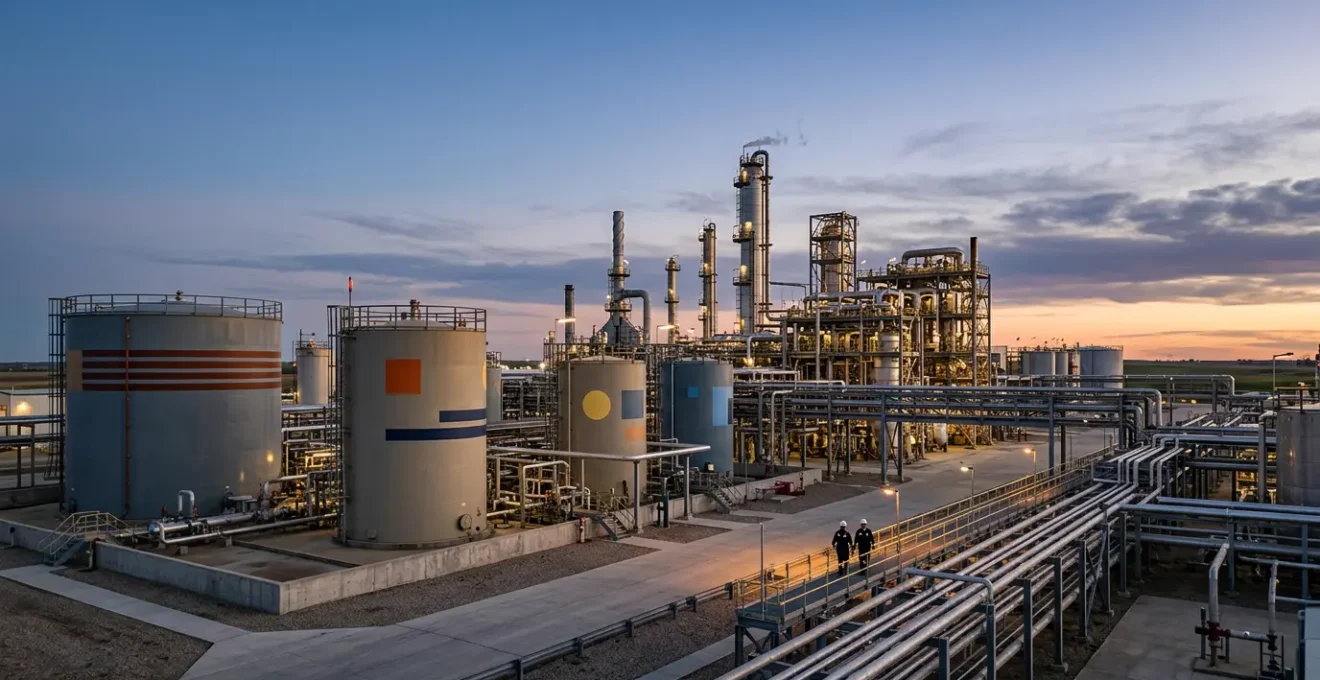
Standard liability policies leave UK chemical and pharmaceutical manufacturers dangerously exposed to the sector’s biggest risks: gradual pollution, undeclared operational changes, and complex recalls.
- Most general policies only cover « sudden and accidental » pollution, creating a critical gap for slow leaks which are a major environmental threat.
- Failing to notify insurers of even minor changes in production chemicals can be deemed a ‘material change in risk’, potentially voiding your entire policy.
Recommendation: Proactively architect a layered insurance program with specialist Environmental Impairment Liability (EIL) and Product Recall policies before an incident or Environment Agency audit occurs.
For UK chemical and pharmaceutical companies, managing risk is a fundamental part of operations. You operate in a high-hazard environment where the potential for environmental incidents, product liabilities, and regulatory scrutiny is constant. Many firms believe their General Liability and Employers’ Liability policies provide a sufficient safety net. However, this often represents a critical misunderstanding of where the true financial dangers lie. The standard insurance market is built on a history of specific exclusions designed to avoid the very risks your sector faces daily.
The common advice to « get environmental insurance » is a starting point, but it’s dangerously simplistic. The real challenge is navigating the complex architecture of specialist cover. It’s about understanding the deep chasm between « sudden and accidental » pollution and gradual contamination, structuring product recall cover that reflects the astronomical cost of a pharma recall, and knowing how to fund a legal defence against an HSE or FCA investigation when the fines themselves are uninsurable. Relying on off-the-shelf policies is not a strategy; it’s a gamble.
This guide moves beyond the platitudes. It is designed for risk managers and financial directors who need to translate theoretical risks into a resilient insurance strategy. We will dissect the most common and costly coverage gaps, examining why they exist and how to architect a bespoke program that genuinely protects your balance sheet, your operations, and your reputation. We will explore the specific triggers that can void a policy, the logic behind underwriting decisions, and how to use insurance as a strategic tool to manage regulatory confrontations.
The following sections provide a detailed analysis of the critical questions you should be asking your broker and insurer. This framework will help you deconstruct your current coverage and build a program that is truly fit for purpose in the high-stakes chemical and pharmaceutical industry.
Summary: Insuring Against Chemical & Pharmaceutical Risks
- Why Does Your Policy Only Cover Sudden Spills and Not Slow Groundwater Contamination?
- How to Structure Product Recall Cover for a UK Pharmaceutical Manufacturer?
- How Much Excess Liability Does a Chemical Plant Need Above £10M Primary Cover?
- The Declined Claim Triggered by an Unreported Change to Production Chemicals
- When Should You Review Pollution Cover: Before or After an Environment Agency Audit?
- Why Does a Sprinkler System Earn Bigger Discounts Than Security Guards?
- Why Can You Insure Investigation Defence Costs but Not Criminal Fines?
- How to Use Insurance to Fund Your Defence Against an FCA or HSE Investigation?
Why Does Your Policy Only Cover Sudden Spills and Not Slow Groundwater Contamination?
This is arguably the most dangerous assumption made by industrial operators. A standard Commercial General Liability (CGL) policy is designed to cover specific, time-bound events. The historical precedent for this is clear; facing a wave of environmental claims, a major shift occurred in the insurance market. In fact, an analysis shows that starting in 1970, insurance rating organizations introduced mandatory pollution exclusion endorsements that specifically limited or removed cover for pollution-related incidents. The small carve-out that remained was for events that were « sudden and accidental »—like a tanker rupture or a catastrophic vessel failure.
The problem for the chemical sector is that many of its most significant risks are not sudden. They are gradual and insidious: a slow leak from an underground storage tank, the long-term seepage of chemicals from a processing area into the soil, or the gradual migration of contaminants into a groundwater source. These events are explicitly excluded from standard policies. To cover these scenarios, a separate, specialist policy known as Environmental Impairment Liability (EIL) or Pollution Legal Liability (PLL) is required. This policy is specifically designed to address liabilities arising from both sudden and gradual pollution events.
Case Study: Fire Leading to Widespread Contamination
A chemical manufacturing plant fire emitted hazardous vapors and liquids, contaminating the air, soil, and groundwater. The contamination spread to nearby properties, triggering a class-action lawsuit for property damage and bodily injury. The plant’s owner faced extensive cleanup costs for both their own site and the surrounding properties. The total cost from the lawsuit and remediation efforts ultimately exceeded $5,000,000, a figure that would likely fall entirely outside a standard CGL policy due to pollution exclusions.
Without specialist EIL cover, a company could face multi-million-pound remediation bills, third-party legal claims, and regulatory enforcement actions with no financial backstop from their insurer. The distinction is not semantic; it is the difference between a covered claim and a potentially bankrupting event.
How to Structure Product Recall Cover for a UK Pharmaceutical Manufacturer?
For a pharmaceutical manufacturer, a product recall is not just a logistical challenge; it’s a multi-faceted crisis with staggering financial implications. The risk goes far beyond the cost of the recalled product itself. It encompasses notification costs, transportation and storage of returned goods, destruction costs, and the cost of replacement products. More significantly, it can involve business interruption losses for both the manufacturer and its third-party customers who rely on the product. This is why standard product liability insurance, which covers bodily injury or property damage caused by a faulty product, is woefully inadequate.
Structuring effective Product Recall insurance requires a deep understanding of these cascading costs. The sheer scale can be immense; a recent analysis showed that the average pharmaceutical recall hit a 15-year high, exceeding 4.6 million units per event. A robust policy must therefore be built to cover several layers of financial loss. This includes « first-party » costs (your own expenses in executing the recall) and « third-party » costs (the financial damages, including loss of profits, incurred by your customers). Furthermore, a valuable addition is cover for crisis management and public relations, essential for protecting brand reputation in the wake of a recall.
This is a complex process best illustrated by the precision required at every stage of pharmaceutical production. The same attention to detail is needed when architecting the insurance that protects it.
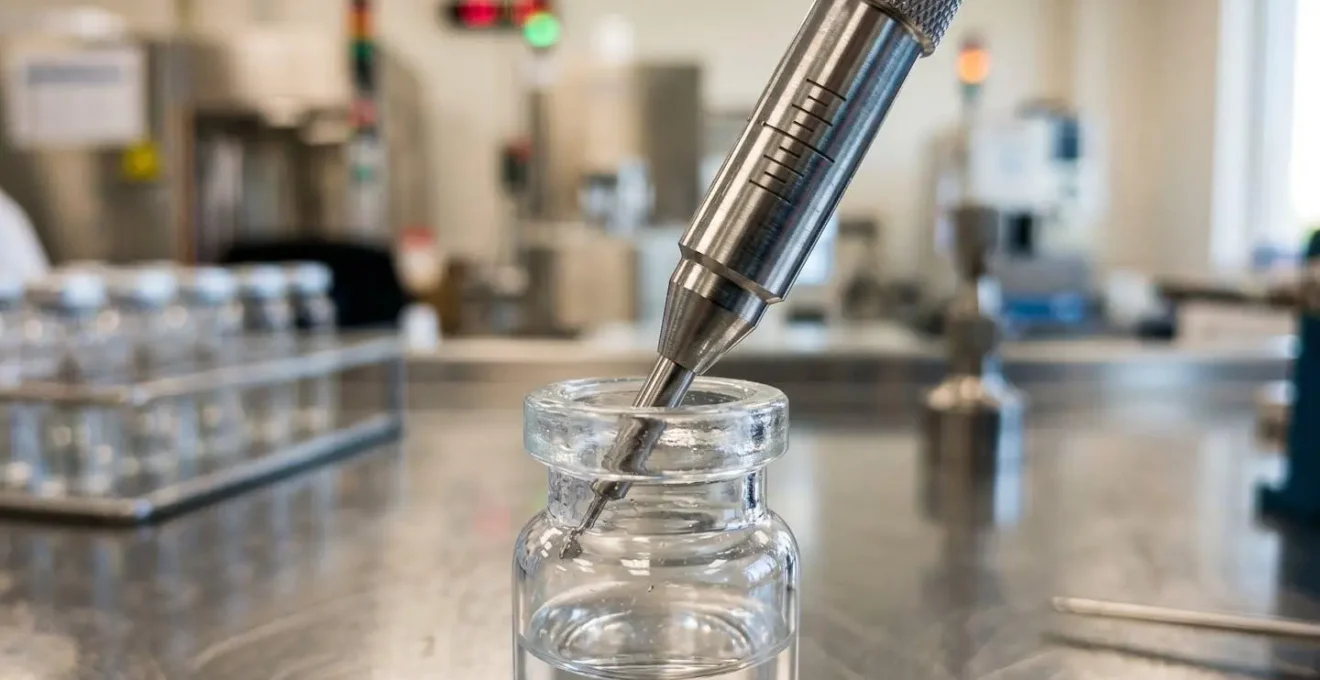
When underwriting this risk, insurers will scrutinize a company’s quality control procedures, batch tracking capabilities, and crisis response plan. A well-documented and tested plan can not only lead to more favourable terms but is also the hallmark of a well-managed operation that understands the gravity of its product-related exposures.
How Much Excess Liability Does a Chemical Plant Need Above £10M Primary Cover?
Determining the appropriate limit of liability is a strategic decision that balances risk appetite with commercial reality. While a £10 million primary liability limit might seem substantial, it can be eroded with alarming speed in the event of a serious incident at a chemical facility. A single event can trigger multiple claim fronts: third-party bodily injury, property damage, environmental cleanup orders from the Environment Agency, and business interruption for affected neighbours. When you factor in legal defence costs, a £10 million primary layer can prove insufficient.
This is where excess liability, or umbrella, policies become critical. They sit on top of primary policies (like CGL, EIL, and Employers’ Liability) and provide additional limits once the primary limits are exhausted. The question is, how much is enough? There is no single answer, but the decision should be informed by a rigorous risk assessment considering:
- Worst-Case Scenario Analysis: Model the financial impact of a catastrophic event, such as a toxic release over a populated area or a major groundwater contamination event affecting a municipal water source.
- Contractual Requirements: Many large customers and government contracts will stipulate minimum liability limits that can easily exceed £10 million.
- Asset Value: Consider not just the value of your own plant, but the value of surrounding third-party properties that could be impacted.
The market for specialist covers can accommodate significant limits, with some pollution policies offering liability limits set up to a maximum of $25,000,000 per incident and aggregate, demonstrating the recognised potential for massive claims. As Trish Carpenter of Travelers Insurance notes, this is a real and present danger for manufacturers.
There’s a very real potential for a large verdict against a manufacturer. Manufacturers of component parts are especially vulnerable to products liability claims.
– Trish Carpenter, AVP, Regional Operating/Underwriting Officer, Travelers Insurance – Why Manufacturers May Need an Extra Layer of Insurance Protection
For a UK chemical plant, a £10M primary limit should be seen as the foundation, not the ceiling. A carefully structured excess layer of an additional £10M, £25M, or even more, is a prudent measure for a board seeking to protect the company’s balance sheet from a catastrophic loss.
The Declined Claim Triggered by an Unreported Change to Production Chemicals
This scenario represents one of the most severe « gotchas » in insurance law. Every commercial insurance policy is based on the legal principle of « utmost good faith. » This requires the policyholder to provide a fair and complete presentation of the risk to the insurer at inception and to report any « material change in risk » during the policy period. What constitutes a material change is broad, but for a chemical plant, a change in the type, volume, or process of hazardous chemicals used is unequivocally material. The consequences of failing to report such a change can be catastrophic.
Insurers have the right to declare the policy void from the date of the unreported change. This means they can refuse to pay a claim, even if that claim has absolutely no connection to the change that was not disclosed. For example, if you introduce a new, more volatile solvent into your process and fail to inform your insurer, they could deny a subsequent fire claim caused by a simple electrical fault in an office area. The legal justification is that they were not on risk for the business you were actually running, but for the one you had previously declared.
The process of notifying an insurer of a material change is a critical component of internal risk management. It requires a robust protocol linking procurement, operations, and the risk/finance function responsible for insurance.
As legal experts on the matter explain, insurance companies can deny claims entirely when policyholders fail to disclose these material changes. The insurer is the one who determines what constitutes a « material change, » and challenging these denials in court is an expensive and difficult process. This highlights the absolute necessity of maintaining an open and continuous dialogue with your insurer about the nature of your operations.
When Should You Review Pollution Cover: Before or After an Environment Agency Audit?
The answer is unequivocally: before. An insurance policy is a contract designed to cover unforeseen events based on the information available at the time of underwriting. Reviewing your pollution cover in the run-up to an Environment Agency (EA) audit is a strategic imperative. The audit process itself can uncover issues—such as previously unknown soil contamination or inadequate secondary containment—that would then have to be disclosed to an insurer. Attempting to buy or enhance coverage after a negative finding is not only more difficult and expensive, but it may also be impossible if the issue is deemed a « known circumstance. »
A proactive review allows you to work with your broker to identify potential gaps in your EIL/PLL policy and address them from a position of strength. This process should also be a standard part of any property transaction, as expert analysis highlights. As noted by Barnes & Thornburg LLP, « PLL policies are useful to help protect a buyer of property with a lengthy history of use of hazardous substances from losses and liabilities not detected during due diligence. » This same logic applies to your own ongoing operations: you want the policy in place to protect against what you *don’t* yet know.
Furthermore, underinsurance is a chronic problem. A recent study found that around 75% of commercial buildings are underinsured, often significantly. By reviewing your coverage before an audit, you can ensure your liability limits are adequate and your policy wording is broad enough to respond to the types of issues the EA is likely to scrutinize. An EA audit should be seen as a test of your existing risk management and insurance program, not the trigger to create one.
Why Does a Sprinkler System Earn Bigger Discounts Than Security Guards?
The logic behind insurance pricing and discounts comes down to one core concept: quantifiable risk mitigation. Insurers are statistical businesses. They build vast models based on historical loss data to predict the frequency and severity of claims. A fire sprinkler system is a highly predictable and effective tool for mitigating the severity of a fire, which is one of the most common and costly perils for any industrial property. Its effectiveness can be measured and proven across thousands of incidents. When a sprinkler system activates, it contains a fire in its early stages, drastically reducing the potential property damage and business interruption, thereby lowering the insurer’s potential payout.
A security guard, while valuable for preventing theft or unauthorized access, has a less quantifiable impact on the major perils that drive insurance losses, such as fire, flood, or explosion. While they can raise an alarm, they cannot physically suppress a large-scale event in the same way an automated system can. The discount reflects the data: sprinklers are a proven loss-reduction technology. For an insurer, this is a far more reliable variable than the attentiveness of a human guard. The costs of an unmitigated event, such as gradual contamination from lubricating oils, can be enormous, with one case seeing total cost of remediation and third-party claims exceeding $5 million.
This entire philosophy is neatly captured in the « COPE » framework, which is a cornerstone of property insurance underwriting. It provides a structured way to assess the physical risk of a property, and understanding it helps explain why certain features earn significant premium credits.
Your Action Plan: Understanding the COPE Risk Assessment Framework
- Construction: Assess the materials used to build your facility. What percentage is fire-resistant (e.g., steel, concrete) versus combustible (e.g., wood frame)? This determines the building’s inherent susceptibility to fire damage.
- Occupancy: Detail how your business manages its « hazards of occupancy. » For a chemical plant, this involves evaluating the specific hazards of the chemicals stored and processed, and the safety precautions (e.g., containment, ventilation) in place.
- Protection: Inventory all active and passive protection systems. This primarily means fire suppression (sprinklers, gas flooding systems), detection systems (smoke, heat, chemical sensors), alarms, and emergency notification protocols.
- Exposure: Analyse all external risks the property faces. This includes proximity to other hazardous sites (external), as well as environmental threats like flood plains, seismic zones, or areas prone to high winds (environmental).
Ultimately, insurers reward certainty. A sprinkler system provides a high degree of certainty in reducing the severity of a fire loss, and the premium discount is a direct reflection of that reduced financial risk to the insurer.
Why Can You Insure Investigation Defence Costs but Not Criminal Fines?
This distinction is rooted in a fundamental principle of UK public policy: a person or entity cannot insure against their own criminal acts. Allowing a company to insure against a criminal fine would remove the punitive and deterrent effect of the law. If a company could simply have its insurer pay a fine levied by the HSE or the Environment Agency for a criminal breach of safety or environmental law, there would be less financial incentive to comply with those laws in the first place. The fine would be seen as just another cost of doing business, which undermines the entire regulatory system.
However, the costs of defending against an allegation are a different matter. An investigation by a regulator like the HSE or FCA can be a lengthy, complex, and incredibly expensive process. It can involve seizing documents, interviewing employees, and commissioning expert reports, all before any charges are even brought. A company is considered innocent until proven guilty, and it has the right to a legal defence. The costs associated with this defence—legal fees, expert witness costs, forensic analysis—can be crippling, regardless of the final outcome.
This is where insurance can step in. Policies such as Directors & Officers (D&O) or specialist Environmental Impairment Liability policies are designed to cover these defence costs. They provide the financial resources for a company to mount a proper defence and prove its compliance or challenge the regulator’s assertions. As described by Great American Insurance Group regarding their pollution liability cover, the policy can include « compensatory, punitive, multiplied or exemplary damages and civil fines, penalties and assessments, where insurable by law. » That final clause is the crucial qualifier, as criminal fines in the UK are not insurable by law.
Therefore, insurance serves not to pay the penalty for wrongdoing, but to ensure a company is not bankrupted by the process of proving its innocence or negotiating the complexities of a regulatory investigation.
Key Takeaways
- Standard liability policies contain strict « sudden and accidental » clauses, leaving you exposed to gradual pollution risks unless you have specialist EIL cover.
- Product recall insurance must be structured to cover not just your own costs, but also the business interruption losses of your third-party customers.
- Failing to notify your insurer of a « material change » (like a new chemical) can void your entire policy, highlighting the need for strict internal reporting protocols.
How to Use Insurance to Fund Your Defence Against an FCA or HSE Investigation?
Facing an investigation from a powerful UK regulator like the Health and Safety Executive (HSE) or the Financial Conduct Authority (FCA) is a daunting prospect for any company. The true, immediate cost is not a potential fine, but the staggering expense of the investigation process itself. Your insurance program can, and should, be structured to be your financial shield during this process. The key is to have the right policies in place long before an investigator arrives.
The primary vehicle for this is a Directors & Officers (D&O) liability policy, often extended with « Company Reimbursement » cover. When a regulator launches an investigation, this policy can be triggered to pay for the legal costs incurred in responding to information requests, preparing for interviews, and representing the company and its directors. For environmental issues, a comprehensive Environmental Impairment Liability (EIL) policy will often include similar cover for defence costs related to an Environment Agency investigation. This is a mature and substantial market, with the PLL/EIL market premium estimated at $2 billion, reflecting its importance.
Case Study: Defence Funding for Historical Contamination
The owner of an industrial park was notified of groundwater contamination by a state agency. An investigation revealed a former tenant was the likely cause, but the tenant denied the allegation. The state ordered the current owner to begin remediation, and they also faced lawsuits from neighbouring property owners. The owner’s legal battle to recover costs from the former tenant, coupled with their own defence and cleanup costs, exceeded $1,250,000. These are precisely the types of investigation and legal costs that a properly structured pollution liability policy is designed to cover.
To effectively use this cover, the process is critical. At the first formal notice of an investigation, you must immediately notify your insurer as per the policy conditions. Your insurer will then typically approve a panel of specialist law firms or agree to your choice of legal representation. The policy effectively becomes a war chest, allowing your company to mount a robust, well-resourced defence without draining operational cash flow. It ensures that your response is driven by legal strategy, not by a fear of mounting legal bills.
Ultimately, insuring a chemical or pharmaceutical plant is not a passive purchase but an active, strategic process. It demands a forward-looking approach that identifies potential coverage gaps and proactively architects a program to close them. Your insurance should be a resilient, multi-layered defence strategy. The next logical step is to conduct a thorough, expert-led review of your existing policies against the specific risks and scenarios outlined in this guide.